
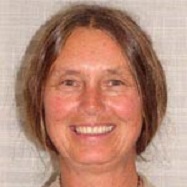
Sharon S. Tisher
Connect with Sharon
About Sharon
Tisher teaches environmental law and energy policy courses; as well as courses in the Honors College “great books” curriculum. Prior to joining the University of Maine in 1994; she was a trial partner in the Connecticut law firm of Day; Berry and Howard. She has served as chair of the boards of the Maine Organic Farmers and Gardeners Association (MOFGA) and the Natural Resources Council of Maine; and directed MOFGA’s Public Policy Committee for ten years; focusing on stricter regulation of genetically engineered crops and genetically modified organism (GMO) labeling; and pesticide notification and reduction policies. She served for seven years as a member of the Steering Committee of the Alliance for a Clean and Healthy Maine; advocating for stricter national and state regulation of chemicals in consumer products. She has served on the Governor’s Task Force to Promote Safer Chemicals in Consumer Products; on the Maine Commission to Study Biotechnology and Genetic Engineering; and on a variety of advisory committees to the Maine Board of Pesticides Control. She has given testimony in regulatory and legislative hearings related to Constitutional takings law; GMO regulation and labeling; pesticides regulation; and safer chemicals regulation. She is a member of Al Gore’s Climate Reality Leadership Corps and has delivered slide shows at venues throughout Maine incorporating Gore’s Nobel Prize-winning presentation and materials from her climate policy course. She is currently focused on the development of A Climate Chronology ; a 230-page color coded chronology of developments in climate science and in U.S. and international policy from 1824 through to the present. She is fundraising to create a selective; interactive; illustrated “Milestones” presentation of the full Chronology.
Contributions
Refuting Climate Change Deniers with Their Own Sources
In the News
Publications
Presents a searchable document available at the above link which explains developments in climate science over the last 200 years in juxtaposition with events in U.S. and international policy. Provides links to news and commentary for further research. Displays the connections and disconnections between science and policy, and offers readers the opportunity to develop their own understanding of the origins of those disconnections.
Presents a list of questions, drawing from information and research found in peer-reviewed journals, advocacy group commissioned studies, and venerable science texts to educate Mainers who would endeavor to increase their knowledge of pesticides and their understanding of safe, alternative treatments and methods.
Urges action in Congress to address the problem of climate change, and stems from interviews with Senator Susan Collins, Senator Angus King, and Congresswoman Chellie Pingree regarding their climate-related initiatives in 2015.
Details the restoration endeavors that the government will have to take to counter the ecological crisis in the Florida Everglades (including restoring the hydrology of the region to more closely approximate pre-flood control and pre-drainage groundwater levels, flooding and sheet flow dynamics, effecting the "unchanneling" of once meandering rivers, and transforming agricultural or residential lands to wetlands), and analyzes Florida common law and federal constitutional law to determine whether such restorative efforts are likely to be characterized as unconstitutional "takings" requiring compensation.