
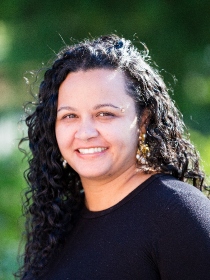
Da'Shay Templeton
Connect with Da'Shay
About Da'Shay
Templeton’s research focuses on school criminalization processes among American Indian, Black American, disabled, and LGBTQIA+ students across U.S. educational systems. As a critical mixed methodologist, theorist, and experimentalist, Templeton investigates how psychological processes and public policies affect academic outcomes for marginalized youth. As an assistant professor, Templeton strives to enact individual, institutional, structural, and systemic change in education through teaching, research, and service.
Contributions
Rebuilding K–12 Physical Education after COVID-19
Empowering Disabled Black Youth Through Equitable Education Policies
California Schools Need a Fitness Revolution
End Corporal Punishment in Mississippi Schools
Improving Student Health Through Physical Fitness in California Schools
Member Spotlight
In the News
Publications
Examines how educators support American Indian and Alaska Native students through culturally responsive leadership, trauma-informed practices, and community.
Examines how the race and gender identity of students shape public evaluations of educators' responses to school discipline incidents. Demonstrates how anti-Black and anti-gender-expansive biases can influence perceptions of educator effectiveness, with important implications for school accountability and personnel evaluation.
Investigates how a student's race and disability influence public support for restraint and seclusion in schools. Reveals persistent inequities in perceptions of school discipline and highlights the need for stronger safeguards and more equitable disciplinary policies.
Explores how racism, ableism, and state surveillance intersect to shape experiences of criminalization and exclusion. Elevates marginalized voices while offering policy recommendations for advancing disability justice and racial equity across public institutions.
Captures the perceptions of former students who have experienced corporal punishment in schools in Mississippi. Findings suggest that the experience was traumatic not just for the students who experienced beatings but also for their peers.
Captures the perspectives of American Indians' opinions on school discipline issues. Findings suggest that representative bureaucracy may disrupt the school-to-prison pipeline for American Indian youth.
Examines the relationship between racial and gender biases and public perceptions of corporal punishment in Mississippi schools. Explores whether biases affect how people rate the appropriateness of punishment, trust student testimonies, justify corporal punishment, and perceive prejudice in disciplinary incidents. Findings indicate that for the rating of the punishment fits the crime, the rating was significantly higher for the Black American gender expansive group compared to other groups.
Applies the framework of stratification economics to explain how structural inequalities, rather than individual choices, produce persistent racial disparities in educational opportunity and outcomes. Argues that policies addressing wealth inequality and institutional inequities are essential for achieving meaningful educational equity.
Documents disparities in access to quality physical education following the COVID-19 pandemic. Shows that students from marginalized racial, socioeconomic, and disability groups experienced unequal opportunities to participate in school-based physical activity and calls for more equitable investment in physical education as a matter of public health.
Demonstrates that financial aid offers substantially increase graduate school enrollment intentions among prospective racially minoritized students. Provides evidence that targeted financial aid policies can help reduce inequities in access to graduate education.
Addresses the rising issue of childhood obesity and emphasizes the importance of school physical education programs in combating it. Urges researchers to study physical fitness in schools in the U.S. to increase its importance to policy makers and educational stakeholders and advance our understanding of educational inequities in school physical fitness.
Examines how Black Lives Matter (BLM) protests influence Americans' perceptions of the police. Finds that (1) Black American participants have a lower evaluation of police performance, but a higher evaluation of the BLM Movement than White American participants; (2) the presence of a general protest negatively impacts peoples' perception of safety, police trustworthiness, and police performance; and (3) a BLM protest casts a stronger effect on White American participants than on Black American participants.