Profile picture for user CarahLynnWhaley

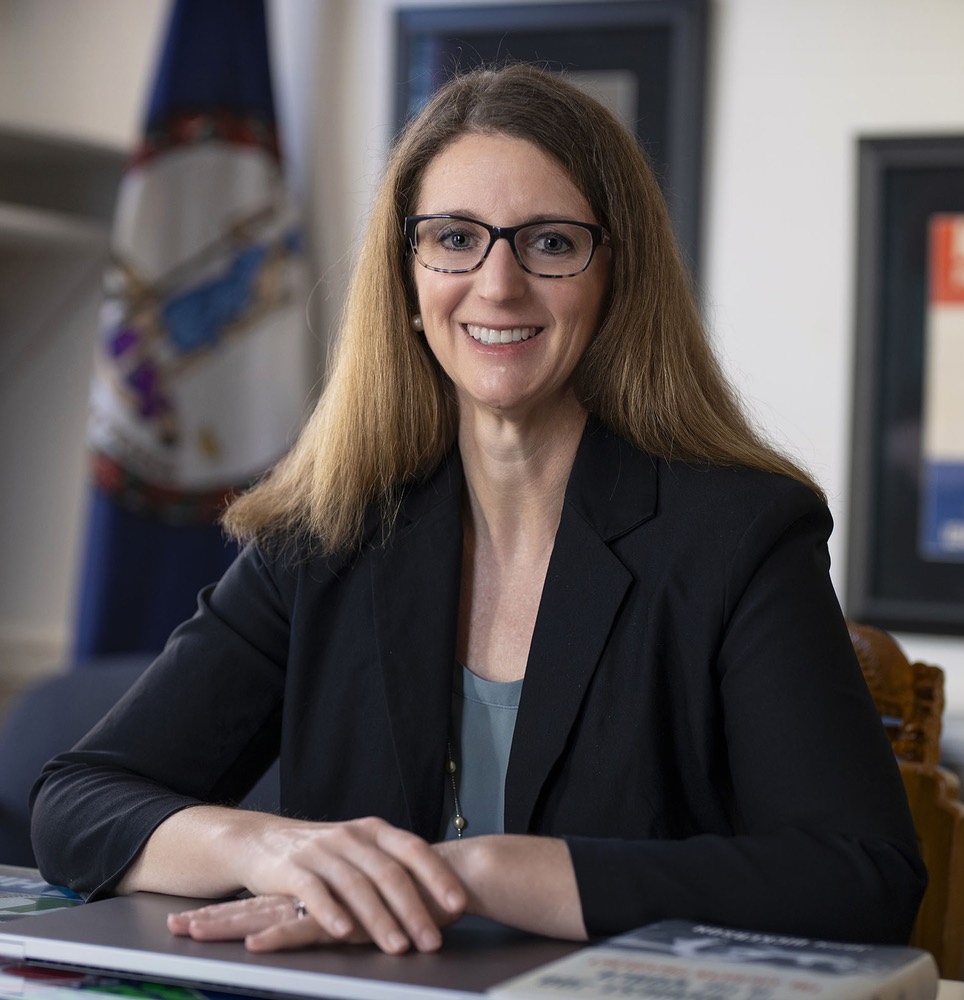
Carah Lynn Whaley

Executive Director, Better Choices for Democracy; Lecturer, University of Virginia

Connect with Carah

About Carah

Carah a member of the National Task Force on Election Crises. Under campus-wide voter education and engagement initiatives facilitated by Carah, over 75% of the student body turned out to vote in the 2020 election. She was appointed by the Governor of Virginia to the Complete Count Commission for the 2020 Census. Carah is currently working to implement electoral reform in order to build trust in elections address underlying system ic challenges to democracy.

In the News

Opinion: "Virginia's Ranked-Choice Voting Plan Needs One Fix ," Carah Lynn Whaley, The Virginian-Pilot, February 24, 2026.
Opinion: "Virginia’s Ranked-Choice Voting Plan Needs One Fix," Carah Lynn Whaley, The Virginian-Pilot, February 24, 2026.
Quoted by Julie Carey in "Virginia GOP Using Ranked Choice Voting in Some Primaries," 4 Washington, May 6, 2022.
Quoted by Jake Conley in "JMU Part of ‘Record-Breaking’ Turnout in 2020 General Election," The Breeze, November 2, 2021.
Opinion: "If You Think Voting Is Important, Try The Census," Carah Lynn Whaley, Leadership/Civic Nation, Forbes, February 20, 2020.
Quoted by Emma North in "Virginia College Students Weigh In Before Election Day," WHSV3, November 4, 2019.

Publications

"Let’s Get Political: Co-Creating and Assessing Civic Learning and Engagement" (with Abraham Goldberg and Dena A. Pastor). Political Science & Politics 55, no. 2 (2022): 398-400.

Discusses political science and politics.

"Can We Get an Upgrade? How Two College Campuses Are Building the Democracy We Aspire To Be" (with Abraham Goldberg, Suzanne M. Chod, William Muck, and Dena Pastor) in Teaching Civic Engagement Globally, edited by E.C. Matto, A.R.M. McCartney, E.A. Bennion, A. Blair, T. Sun, and D. Whitehead, (American Political Science Association, 2021), 209-225.

Addresses how a small private liberal arts college in a major metropolitan area and a large comprehensive university in a rural area of the United States advance and assess civic learning and engagement initiatives in a time when democracy is being threatened. 

Civic Engagement in an Era of Divisive Politics and Civil Unrest (Journal of Public Affairs, 2022).

Encourages readers to deliberate on the different lenses through which they might view the January 6, 2021 insurrection as a symptom of longstanding inequities in access, voice, and participation in democratic institutions, and to use it as a teachable moment for reimagining a more just and inclusive democracy.

"We the People, We the Process: Engaging Students in Election Administration" (with Angelina Clapp). Political Science 2, no. 2 (2022).

 Discusses engaging students in the election process to build trust in democratic institutions.

"Let’s Get Political: Co-Creating and Assessing Civic Learning and Engagement" (with Abraham Goldberg and Dena A. Pastor). Political Science and Politics 55, no. 2 (2022).

Demonstrates the importance of campus-wide civic learning and democratic engagement learning outcomes and how to measure them.

"2020 APSA Election Reflection Series: Bringing Politics Back In" (with Abe Goldberg). Political Science Now (2021).

Discusses the rise in student voting being encouraging and hopefully a sign of things to come, but turnout alone is not sufficient to build a more just and inclusive democracy.

"Can We Get an Upgrade? How Two College Campuses Are Building the Democracy We Aspire To Be" (with Suzanne M. Chod, Abraham Goldberg, William Muck, and Dena Pastor) in Teaching Civic Engagement Globally (2021), edited by Elizabeth C. Matto, Alison Rios Millett McCartney, Elizabeth A. Bennion, Alasdair Blair, Taiyi Sun, Dawn Michele Whitehead , (American Political Science Association, 2021), 209-222.

Illustrates educators around the globe are facing challenges in teaching politics in an era in which populist values are on the rise, authoritarian governance is legitimized, and core democratic tenets are regularly undermined by leaders and citizens alike. Mentions to combat anti-democratic outcomes and citizens’ apathy, Teaching Civic Engagement Globally provides a wide range of pedagogical tools to help the current generation learn to effectively navigate debates and lead changes