
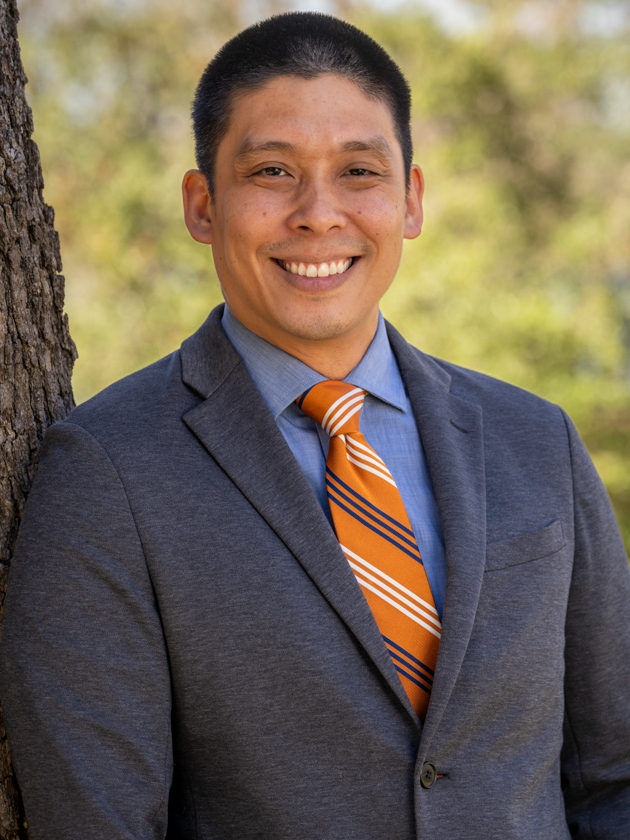
Andrew Kwok
Connect with Andrew
About Andrew
Kwok's research focuses on beginning teacher support, particularly from three separate angles. He examines teacher preparation policy through issues related to diversifying the teacher pipeline and excavating teacher beliefs in relationship to instructional quality, entry, and attrition. He also studies the preparation, training, and implementation of classroom management, a key pedagogical skill that challenges many novice teachers. Lastly, he investigates teacher induction and new educator supports, generally around coaching and support. Kwok has previously served as faculty at California State University, San Bernardino and as a high school science teacher in Oakland, CA.
Contributions
Regulation for Federal Financial Assistance
In the News
Publications
Addresses key challenges for new teachers, such as classroom management and instructional quality. Highlights evidence-based practices that make teacher induction programs effective in supporting early-career educators, particularly in high-need schools.
Examines over 3,000 supervisor observation evaluations. Finds that managing student attention was most detrimental to scores in early observations, whereas instructional feedback and verbal corrections were prioritized later in clinical teaching.
Considers preservice teachers’ expressed motivation for pursuing a teaching career. Finds that intrinsic enjoyment of teaching and experiences with adversity predicted higher clinical teaching performance and lower attrition as a full-time teacher.
Investigates the pipeline into teacher education and employment as a K–12 public school teacher. Shows that students of color, men, and students with higher SAT scores are substantially underrepresented in teacher education.
Considers the insufficiency of classroom management preparation. Proposes the CM PReP framework to guide teacher educators towards redesigning courses to appropriately prepare preservice teachers to manage the needs of current students.
Explores teachers’ behavioral, academic, and relational beliefs and how these beliefs shape the actions used in managing their classrooms. Reveals that more relational classroom managers were associated with higher ratings of instructional quality.