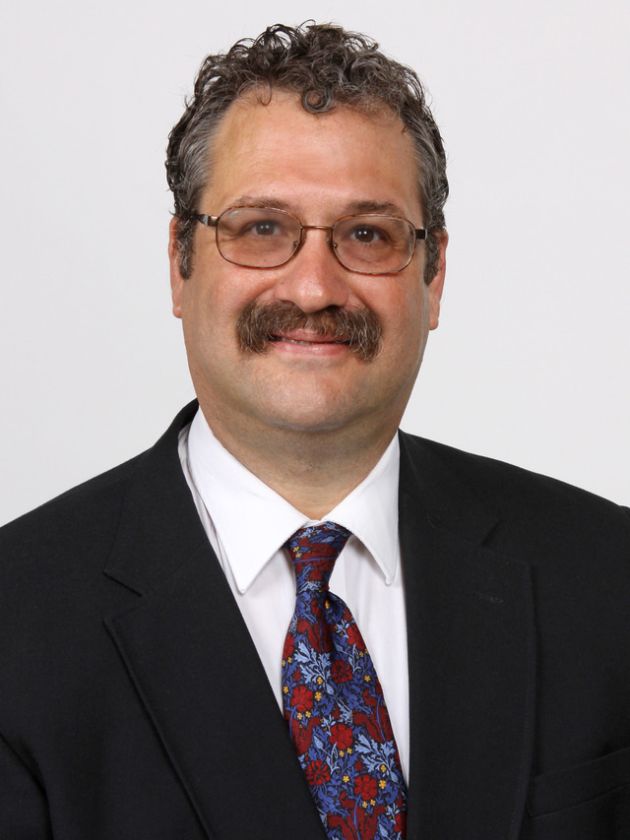
Profile picture for user JosiahMHeyman

Josiah M. Heyman

Professor of Anthropology, Endowed Professor of Border Trade Issues, and Director of the Center for Inter-American and Border Studies, The University of Texas at El Paso

About Josiah

Heyman’s teaching and research center on the U.S.-Mexico border. His core focus is two fold: environmental justice with respect to water, heat, trees/other landcover, and utility impacts on poor consumers; and border enforcement of all types (guns, drugs, money, terrorism, as well as migration), and alternatives to current border migration and security policies. More broadly, Heyman’s expertise extends to border cultural mixes, economic development patterns, language use, health care, etc. He recently chaired the American Anthropological Association’s task force on border walls.

Contributions

Is the Southwestern Border Really Unsafe?

  • Ernesto Castaneda

In the News

Interviewed in "Border Report Live: What happens if TPS is revoked?," Border Report, April 30, 2026.
Quoted by Elisabeth Malkin in "In Ciudad Juárez, Migrants Dream of America but ‘Run Into Trump’s Wall’," New York Times, August 8, 2019.
Research discussed by Jonathan Tilove, in "As he Ponders 2020 Bid, Beto O’Rourke Takes on Trump’s Wall," Austin Stateman, February 23, 2019.
Research discussed by Mallory Falk, in "Critics Say Border Wall Could Harm Wildlife Corridors And Sensitive Desert Terrain," NPR, February 21, 2019.
Research discussed by Astrid Galvan and Julie Watson, in "Three Dead, Eight Injured in Immigrant Smuggling Attempt at Border," Associated Press, November 30, 2018.
Quoted by Colleen Long in "Border Agents Face Split-Second Decisions on Use of Force," Associated Press, November 29, 2018.
Quoted by Bob Ortega in "Is Border Patrol Work Dangerous? Not Compared to Being a Cop," CNN, May 1, 2018.
Quoted by Aileen B. Flores in "New US Census Citizenship Question Could Affect El Paso Representation and Funding," El Paso Times, March 30, 2018.
Quoted by J.D. Long-García in "New Report Details Troubling Immigration Enforcement Measures in El Paso," American Magazine, January 22, 2018.
Quoted by Christian Vasquez in "Borderland Dehumanizes and Marginalizes Asylum Seekers, According to Recent Report," The Prospector, January 18, 2018.
Quoted by Monica Ortiz Uribe in "El Paso Plans for Possible "Toilet to Tap" Water Recycling," KRWG NPR, September 30, 2015.
Quoted by Merrill Hope in "People Ditching Texas Border City More than Any Other in U.S.," Breitbart, July 24, 2015.
Quoted by Casey Purcella in "Immigrants Bypass New Mexico, Experts Say," Daily Lobo, April 29, 2015.
Quoted by Maria Esquinca in "Regional Water Shortages Prompt Researchers for Change," Prospector, April 21, 2015.
Opinion: "You Lie!”: Going Beyond the Obama-Wilson Debate," Josiah M. Heyman, Access Denied blog, December 1, 2009.

Publications

"Provider Perceptions of the Effects of Current U.S. Immigration Enforcement Policies on Service Utilization in a Border Community" (with Josiah M. Heyman and Mark W Lusk). Social Development Issues 4, no. 1 (2019): 49-63.

Outlines perceptions about effects of immigration enforcement policies under the Trump administration on service utilization from twenty service providers in health care, mental health, legal affairs, and immigrant advocacy in El Paso, Texas.

"The Homeless and Occupy El Paso: Creating Community Among the 99%" (with Curtis Smith and Josiah M. Heyman). Social Movement Studies 11, no. 3 (2012): 356-366.

Discusses how protestors during the Occupy movement in El Paso, Texas, argued that the homeless exemplified an important segment of the 99%, which gave the homeless people a different identity. Elaborates on how homeless people even credit the activities they carried with the Occupy El Paso movement for helping them recover from addiction and their eventual attainment of housing.

"Briefing on Arizona's Immigration Law, S.B. 1070"

Human Rights and Social Justice Committee Briefing No. 1

, Society for Applied Anthropology, December 2009.

Summarizes the controversial Arizona law, putting it in the wider context of conflict within social change.

"Ports of Entry in the ‘Homeland Security’ Era: Inequality of Mobility and the Securitization of Transnational Flows" in International Migration and Human Rights: The Global Repercussions of U.S. Policy, edited by Samuel Martínez, (University of California Press, 2009), 44-59.
Shows how globalization presents the challenge of simultaneous mobility and barriers, and how ports of entry respond to this via unequal regimes of crossing inspections.
"United States Border Security after September 11" (with Jason Ackleson) in Border Security in the Al-Qaeda Era, edited by John Winterdyck and Kelly Sundberg , (CRC Press, 2009), 37-74.
Reveals that despite homeland security rhetoric after 9/11, U.S. border control policies since the mid-1990s have been focused on labor and family migrants from Mexico and Central America.
"Constructing a Virtual Wall: Race and Citizenship in U.S.-Mexico Border Policing" Journal of the Southwest 50, no. 3 (2008): 305-334.
Finds that U.S. border enforcement policy stems from complicated interactions of economic interests, racially tinged reaction to social change, and debates over the future of citizenship in a world in transformation.
"Guns, Drugs, and Money: Tackling the Real Threats to Border Security", Immigration Policy Center, Washington, DC, December 2000.
Finds the emphasis on migration enforcement at the U.S.-Mexico border misplaced – the real human security risks stem from the gun-money-drugs nexus.
States and Illegal Practices (Berg Publishers, 1999).
Shows that rather than being polar opposites, states and their official legal systems have subtle, complex connections to illegal practices.