
The Fight for Climate Justice
Miranda: Last year, climate change took center stage with presidential candidates releasing these bold plans to tackle the issue. Massive protests organized by young people all around the globe, and even more dire reports coming out of the United Nations. This issue is getting attention unlike ever before. So where does organizing around climate change stand now? How are some organizers focusing on justice and equity in their work, and how is this all playing out in Puerto Rico after the devastation caused by Hurricane Maria in 2017?
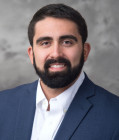
Hi, I'm Miranda Cawley, and this is the Scholar Strategy Network's No Jargon. Each week, we discuss an American policy problem with one of the nation's top researchers without jargon. For this week's episode, I spoke to Fernando Tormos Aponte. He is a postdoctoral research associate at the University of Maryland, Baltimore County, a visiting scholar at Johns Hopkins University, and a fellow at the Union of Concerned Scientists Center for Science and Democracy. And he is also a former Scholar Strategy Network postdoctoral fellow.
Here's our conversation.
Dr. Tormos Aponte, thank you so much for coming on No Jargon.
Fernando: Thank you for having me. It's my pleasure.
Miranda: So you study social movements and you've looked specifically at social movements around climate change and climate justice. So, to start us off, can you just lay out for me where things stand right now? I know 2019 was a huge year for climate organizing. So where does that leave us at the beginning of 2020?
Fernando: It has been an important year. It's also been a very challenging year. Climate change right now is such that the people who are in the front lines of this battle are experiencing extreme weather events that are also inhibiting their ability to continue their activism. They're also experiencing repression and they're experiencing, in certain cases even, threats to their lives. So it's been a great year for activism in the sense that there are a lot of newcomers, there is renewed momentum in the climate movement and the climate justice movement more specifically, but it's also a year full of challenges.
Miranda: Absolutely. And let's talk a little bit more about climate justice specifically. I think people are relatively familiar with, you know, climate change as an issue, but what is different about climate justice? What are the goals of that movement in particular?
Fernando: So climate justice is a people-oriented approach to addressing climate change that puts the people who are affected by climate change first, as it relates to enacting policies and creating new ways by which we can cope with the challenges that climate change presents for vulnerable populations in the world, as well as adapt to things that are now inevitable as they relate to climate change.
Miranda: And who are the people who are involved in this issue?
Fernando: It includes vulnerable groups, so people like youth groups, gender-based groups like women. It includes indigenous peoples, it includes workers, and among other groups, like people from the global south and developing countries. It also includes allies. With major green groups, people in the global north and developed countries, very well-resourced environmental organizations. So it's really an array of groups, different alliances that are coming together to try to develop a people-oriented approach to addressing climate change.
Miranda: I'd like to focus a little bit more on what you just mentioned, the global north. What do you mean by that versus like the global south? Where do those divisions draw down?
Fernando: It's an interesting question because there have been, of course, people who have said that within the global norths, so developed countries more generally, there are pockets of the global south. So we have people who are experiencing conditions that are very familiar to folks in developing countries, even within developed countries.
So we have food scarcity, we have extreme weather events, and we have toxic waste ash dumping all in the developed world that is somewhat similar to what is happening in the developing world that is commonly referred to as the global south. So it is a bit of a muddy definition, but generally it refers to this divide between the global north, which have historically been responsible for most of the world's pollution and greenhouse gas emissions, and those in the global south, those in developing countries that are now beginning to industrialize and are now also contributing to a large share of greenhouse gas emissions in the globe.
Miranda: To give us a better idea of what the makeup of this movement really looks like, could you share with us a story about a group or an individual who's part of this movement, who you've met through your research?
Fernando: Definitely, one of the people who come to mind immediately has been a person like Jose Raul, who is from San Diego and Tijuana, who has traversed these borders very fluidly, organizing across both sides of the border against some of the impacts of different kinds of pollution. Such as in San Diego, for example, the Navy had been dumping in the bay for years and years. And eventually they got together with scientists, and they commissioned studies that were able to identify all these different toxins in the water and in the air. And thanks to some of that and some litigation, some lawsuits, they were able to eliminate some of these practices, some of these practices of dumping in the bay and emitting all sorts of gases in the atmosphere.
So Jose Raul was at the forefront of that and Jose and in his lifetime has been involved also with organizing workers around issues of climate change, what folks call a just transition away from a carbon-heavy economy. And what people like Jose Raul have been arguing is that workers need to be involved in the process of imagining and enacting a world that frees itself from this heavy reliance on greenhouse gases.
Miranda: Talking about labor here, it gets me wondering what the origins of the climate justice movement are. What are its movement predecessors and how did it come into being?
Fernando: So, actually, it's interesting that you asked that because scientists had a lot to do with it as well as local communities. So basically there was this figure who is now known as the father of environmental justice, Robert Bullard, who developed this study where he found that a lot of the toxic dumping that was happening in the United States was happening in communities of color, Black and Latino communities in the United States that were predominantly targeted for toxic waste sites. And accordingly, they were suffering from all kinds of health problems.
And now we have research that shows that this also has impacts on whether people participate politically, like Michael Lehrer’s work that finds that there is some association between this waste and these toxins, and the extent to which people go out to vote. So these communities began to get organized. They began to reach out to other communities that were also experiencing the effects of different forms of environmental inequalities and different forms of health issues as they relate to the environment.
And they began to organize. And in the 1990s, they got together and they developed these principles for inclusive and democratic organizing, what they called the Jemez Principles for Democratic Organizing. And what these principles laid out was an approach to organizing an environmental movement that prioritized the issues of marginalized groups of people like Black and Latino communities that were subject to these dumping practices and putting those at the forefront of the environmental movements agenda, and also letting these groups lead the environmental movement, and that meant having to allocate resources and spaces for these groups to participate in environmental activism.
Miranda: Yeah, and that sounds really different from what I understand to be the origins of the ongoing climate movement at that time. Could you tell us a little bit more about the relationship between the mainstream climate movement and climate justice and how they differ?
Fernando: Definitely. So traditionally, the environmental movement had been led by groups in the global north and developed countries, places like Europe, Eastern Europe, and the United States and Canada, and a lot of these groups, organizations like the Greenpeace among others were at first predominantly focused on questions of conservation and questions of animal cruelty, anti-nuclear campaigns, among other kinds of campaigns. They began to run into some conflicts with some of the communities that were living in, the areas in which they wanted to organize, that were saying, look, you're not taking us into account and we need to be included in these campaigns.
So they began to realize that their activism could not be completely successful and effective when they weren't including a lot of the communities that were affected by their own advocacy and their own campaigns. So over time, particularly in the 2000s, there was this move to get all these groups together, the major green groups, these groups that are really well funded, that were predominantly in Europe and in North America, together with indigenous groups, with Black and Latino environmental groups. Black farmers, for example, that were trying to retake land that was taken from them, indigenous peoples that were trying to retake land that was taken from them.
And they got together and they said, look, we need to cooperate in order to make the environmental movement more effective and even broader. And it will take, they all recognize that it would take a broad and strong, massive environmental movement to get some major policies passed. And this is something that people like Leah Stokes, for example, has mentioned, mentioned in this same podcast, the need for this massive movement.
So they got together and they realized that there were all these groups that had all this money, that were doing important activism, but they weren't helping groups that were also on the front lines, that didn't have a lot of support. They began channeling a lot of support, financial support from these well-funded groups to these groups that did not have much funding. What that allowed was for these groups that were Indigenous-led, Black and Latino-led, and groups from the global south to have a sustained presence. They were able to keep going to climate change conferences, for example, biodiversity conferences, and go and take their claims and their demands to these conferences and making the movement a more legitimate representative of the people that it claimed to advocate for.
Miranda: And in your research, you've described this type of big tent focus as has norms of inclusion and that's really helped to sustain the climate justice movement up until this point. What do you mean by norms of inclusion and, and what does that look like on the ground?
Fernando: So there are a couple ways in which movements can adopt these norms of inclusion. I've also called this intersectional solidarity. And basically what it means is that in order for movements to sustain cooperation between different social groups, people with different interests, different identities, different values, they have to think of ways in which they can include those who don't agree with the majority. They have to include people who have been historically excluded from leading these groups. They have to support their leadership and they have to respect their spaces where they meet autonomously and they developed their own political agenda.
So norms of inclusion include things like respecting people's dissent but still working to find some kind of consensus. So really accepting that there's always going to be differences in the movement and coping with these differences and having these kinds of negotiations, sustain negotiations as opposed to breaking off from the larger movement.
It also means promoting the leadership of marginalized people. So the women's movement, for example, was able to do that in their major. Women's conferences in the UN over time by, for example, giving scholarships to women from Africa and the Global South to attend these conferences that were really expensive, to try to attend. So these scholarships allowed them to have a presence there and to have these major movement meetings where they could develop a movement-wide agenda that was representative and inclusive of the perspectives of the people who had been historically excluded from those deliberation processes.
Miranda: Those norms sound really difficult to maintain over time and, and over space especially 'cause this is global problem and in many ways a global movement, which gets me wondering how is the movement organized? It exists at all these different levels, just like climate change does. But how are they able to keep everyone moving in the same direction?
Fernando: So one of the ways in which movements can build on the strength of having a lot of diverse groups involved in it is by recognizing that politics happens at the national level, at the state level, at the local level, and at the international level. Once they recognize that, they can organize group that mirror those levels of government. Coordinate across those levels of government so that they keep pressure on local governments, state governments, national governments, and international intergovernmental organizations. So some scholars have called that federated organizing like Theda Skocpol with the Scholar Strategy Network.
Others like Elinor Ostrom called it polycentrism. So it basically means this sort of autonomous, decentralized organizing that is still coordinated between these groups across different levels of government and across different geographical spaces, so different countries and different cities. And then of course, working now in our times when we see movements that are focusing on pushing mayors to curb their cities’ greenhouse gas emissions, or pushing their states in the United States to adopt climate change adaptation plans.
In the absence of sweeping federal reform, these are often really important ways in which there's been some policy addressing climate change to the United States. It is, of course, not enough, and a lot of folks have said something has to happen at the federal level. Something has to happen at the international level as well. But activists cannot forget that there is a world above and below the national level.
Miranda: So how has this type of organization at these various levels really helped strengthen the movement? Like I assume having those different levels in itself is a strength, but what else does the structure allow a movement to accomplish?
Fernando: So movements can keep pressure on various governments in different geographical spaces, different countries, and different levels of government, like city governments, state governments. So keeping pressure on different elements, different actors that are complicit in the kind of effects that we see in climate change.
Another thing that they are able to do is to sustain their activism over time. Because sometimes there will be folks who are experiencing challenges in a particular country or a particular city. They may, for example, be repressed. So when you have people in other contexts, they're able to share resources with them. They're able to share information. And when people in one context cannot keep their activism going, others can pick that up for them and support them from a distance.
Miranda: And on the flip side of that, what are some of the challenges of this type of movement structure?
Fernando: It's very challenging, especially when we're talking about getting people together that may not speak the same language, that don't have the same amount of resources to attend meetings like climate change conferences.
So it entails investments like actual financial investments from well-resourced organizations towards making movements inclusive and diverse. And it is, of course, an ongoing and challenging process. This requires ongoing meetings, ongoing negotiations, and oftentimes some of these differences are things that people cannot cope with, and you may risk people separating and forming their own organizations.
So some scholars have said that that's actually not a bad thing, that movements benefit when they have this kind of diversity of organizations and diversity of tactics. Just to give you an example of, or an analogy, makes sense to have people outside of a boardroom in the streets putting pressure on those that are in that boardroom of a corporation, for example, and having advocates within that boardroom saying, look, you have pressure outside of this boardroom. You have pressure inside of it. You should make some concessions, you should make, you should adopt some changes. And that's kind of tactical. Diversity has helped movements exert some kind of political impact and influence.
Miranda: Yeah. So let's get into some of the good news. What are some successes you can share with us from this movement that we've seen over the past couple of years?
Fernando: So the Paris Accord, which was of course a historic moment in 2015 when most of the world's countries got together and decided that they were going to adopt a legally binding agreement where. Every signatory of this agreement was going to commit to curbing and reducing their greenhouse gas emissions. That was a historic process, and it opened a lot of opportunities for movements and environmental groups to have an impact on how the Paris Accord is actually going to look.
One thing that happened in Paris was that the accord recognized the value and the importance of the knowledge of indigenous peoples in the process of adapting to climate change and indigenous peoples. It's important to remember that during the Paris Conference, some were very upset at the fact that the Paris Accord ended up dropping an article that recognized their rights as part of the processes by which the world was going to address climate change. So a lot of indigenous peoples came out of Paris saying, look, this was a human rights violation.
This accord fell short of doing what we needed it to do, but the accord did adopt language, legally binding language that recognize the value of the knowledge of indigenous peoples who have been dealing with the environment for centuries now, and who depend oftentimes on these ecosystems that they inhabit and on biodiversity and they populate vast amounts of the world's surface. So they were able to use that language to now push for the creation of a new indigenous peoples platform that represents indigenous peoples from all over the world, from different continents of different genders, who will be able to develop recommendations for United Nations state parties.
So countries, as they continue to adopt policies to adapt to climate change, that was an important victory that movements are still working with to continue to expand. And they're trying to get even more entry into these negotiations because right now, the way this works is that a lot of these organizations still can't be present in the actual negotiations and don't have a vote on a lot of these policies that are nevertheless going to affect the people that they advocate for. So it's still an ongoing process. There's still a lot of challenges, but there have been landmark victories in the process.
Miranda: Yeah, and moving away from the global level though, that's a fantastic feat that they were able to, indigenous peoples were able to keep pushing even after suffering a setback like that. That's, that's fantastic. But I know that this activism's also happening on the local and state level, and I wanted to ask you about your research about environmental organizing in Puerto Rico. What's, what's the history there?
Fernando: Definitely there have been some important victories at the state and local level in the United States. Like for example, right now we have changed the kind of debates that we're having on how to address climate change. Where we are now considering sweeping policy change, things like the Green New Deal, and one of the things that climate change groups are, advocating for is that we see the Green New Deal as a series of policies at different levels of government as opposed to only one major policy.
So there have been a lot of victories at the local level, things like that. New York City and New York state, we've been seeing the adoption of Green New Deal-like policies. And we've seen other victories in places like for example, Puerto Rico, where I've done some of my recent field work.
So some of the major victories in the past 10 years include avoiding the construction of an enormous gas pipeline that was going to cross the island from south to north. That was going to be extremely devastating for a lot of ecosystems that it was going to impact, and activists got together and they continued to push against this sort of pipeline, and they were able to block it.
There have been similar victories of that sort in the United States. Some of them short-lived, which points to the necessity of ongoing activism of sustaining activism over time.
Miranda: Right. And I'm curious about, I know, I certainly remember, and our listeners probably do too, the devastating images coming out of Hurricane Maria's impact on Puerto Rico in 2017. And I know you've been studying the response of governments to that natural disaster. Can you tell us a little bit about that research?
Fernando: Definitely. So Hurricane Maria has been a historic disaster in Puerto Rico, but also globally. It's been one of the, it was one of the longest power outages in the history of, in in world history. It was one of the costliest hurricanes in the United States’ history. And it was one of the deadliest in US history. Basically, one of the things that I've been doing with my research in Puerto Rico has been trying to examine empirically some of the suspicions that people had on the ground in the aftermath of Hurricane Maria.
So when I was able to go down to Puerto Rico after the hurricane, I realized that a lot of folks on the ground still didn't have power. We're saying and repeating this basic statement of, I'm not getting my power back soon because I am not in an affluent or a rich neighborhood. I am not in a ruling-party supportive neighborhood.
So I asked myself, actually, this is something that we could probably examine empirically. So for a period of about a 100 days, I kept calling every day different authorities, different agencies in the island and in the archipelago more generally, until we were able to get the data that we needed to run these analysis and we basically confirmed what was this widespread suspicion that government in fact took longer to respond to neighborhoods that were not ruling party supportives.
So basically, where the ruling party didn't win in the past elections and they also had to wait in neighborhoods that were not as affluent as other neighborhoods, they had to wait longer for their power to be restored. And this is, of course, a matter of life and death because energy is crucial for people to survive the aftermath of a disaster of the magnitude of Hurricane Maria. People had limited access to dialysis centers. They need to be able to refrigerate their medicines for diabetes and among other kinds of energy needs.
Miranda: I guess I'm curious, out of that study, if you found any solutions for the people who were experiencing that kind of tepid response from the government.
Fernando: Definitely. I'm happy you asked that because one of the most encouraging aspects of this project has been that we really didn't go into this project wanting to tell different authorities, Hey, you got it wrong. Actually, what we want to do is to make sure that this doesn't happen again. So we want to think about policies that could help us avoid this issue moving forward.
And as I've been doing my research, I found that in Michigan, for example, that last year there was this big power outage because of a winter storm. And one of the results of that, one of the policy outcomes of that big power outage, which was going to be very threatening because, of course, people need their heating in the middle of this winter storm. One of the policy outcomes of that was that now they've adopted a policy in Michigan where power authorities need to restore energy for households first before they restore energy for other major corporations. So they prioritize households and people. Their restoration of energy first to make sure that they don't suffer any sort of loss of life and that sort of thing.
I see that as an example that could be applied in other contexts that are subject to these power outages and are at threat of having these major power outages. Places like California, which of course recently suffered a lot of power outages with the wildfires, places like Texas with power outages in the aftermath of Hurricane Harvey, places like Florida. And then of course places like Puerto Rico, which had one of the largest power, longest power outages in world history. We're calling this restoration approach, the affirmative restoration approach, which basically prioritizes vulnerable populations in the process of restoring energy.
And we're not too far from really doing that because places like Miami and places like Florida have already identified what they believe to be crucial sites for power restoration like hospitals, homes for the elderly, among other kinds of places where power needs to be restored as soon as possible so it doesn't seem like an intractable problem or something too farfetched that can be adopted in emergency plans.
Miranda: That makes a lot of sense. I'm glad you guys have been able to identify that. Yeah. So moving forward, what are some lessons that people either in Puerto Rico or around the world can learn from your research about effective movements?
Fernando: One of the most frustrating things for activists is this process of sustaining activism over time, especially when you have so many differences, I think one of the things that I find in my research that is helpful for movements is that we should always anticipate differences. Differences of opinions, differences of identities. And the question is not whether we will have them. The question is how will we cope with them? And there are a lot of important lessons that we can draw from how other movements are doing this and our own activist history that we can adopt and movements moving forward.
So the Climate Justice movement, for example, an environmental activist and more generally, is now having to cope with these challenges as we see newcomers like Extinction Rebellion or Fridays for the Future. And they're quickly learning this lesson of there are people who have been at the forefront of these battles for quite a long time and who are vulnerable to the effects of climate change. And more recently, during the Climate Change conference that took place in Madrid, we saw Greta Thunberg host a press conference where the only thing that Greta did was to offer the microphone for youth indigenous peoples to provide their perspective and to raise their voices in this important setting for addressing climate change.
Miranda: Can you tell us who Greta is? Really quick for our listeners who may not know.
Fernando: Greta is a young activist that has risen to a celebrity status. In the recent times, she was just named Time person of the year because of the activism that Greta engaged in, where she was basically walking out of school and hosting these strikes that at first there were very few people joining them, but over time this became a global phenomenon where we are now seeing activists of this kind, activism of this kind happening all over the globe and people walking out of their workplaces of their schools. We have young people, we have working people, and people from different identities, scientists themselves included, that are now saying we need to disrupt the way that we're doing things in order to raise more awareness about the urgency of the issue of climate change.
Miranda: Dr. Tormos Aponte, thank you so much for coming on No Jargon.
Fernando: It's been my pleasure. Thank you so much for having me
Miranda: And thanks for listening. For more on Fernando Tormos Aponte's work, check out our show notes at scholars.org/nojargon. No Jargon is the podcast of the Scholar Strategy Network, a nationwide organization that connects journalists, policy makers, and civic leaders with America's top researchers to improve policy and strengthen democracy.
The producer of our show is Dominik Doemer, and our sound engineer is JM Baez. If you like the show, please subscribe and rate us on Apple Podcasts or wherever you get your shows. You can give us feedback on Twitter @nojargonpodcast or at our email address, [email protected].